Sunday, 3 April 2011

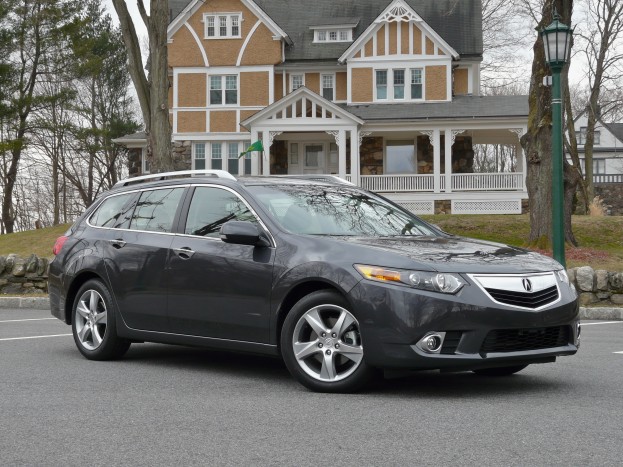
New Acura TSX Sports Wagon 2011 Review


Automakers often set their wagons up to fail by pricing them higher than comparable SUVs, but Acura has not made that mistake here. At a reasonable $31,820 (base price), the TSX Sport Wagon actually undercuts by a bit the price of Acura’s compact crossover, the RDX.

The problem is that Acura is offering the Sport Wagon with just one powertrain: a 2.4-liter four-cylinder with a five-speed automatic and front-wheel drive. The V-6 and the manual transmission available in the TSX sedan can’t be had here, which cuts off a small but enthusiastic subset of potential wagons buyers.


The more worrying problem, though, is the lack of all-wheel drive. Station wagon people are heavily concentrated in the Northeast, where all-wheel drive is very popular. Of the other premium-brand wagons, every one offers all-wheel drive. It’s standard on the Audi A4 Avant and the Mercedes-Benz E-class wagon, and it’s optional on the BMW 3-series wagon, the Saab 9-3 SportCombi, the Volvo XC70, and the Cadillac CTS wagon.

It’s a shame to handicap the TSX Sport Wagon this way, because this car is awfully nice to drive. The chassis tuning is really excellent—the suspension is tautly sprung, with superb control of body motions, yet it fairly glides over badly chopped up blacktop. The steering is also nicely weighted.


The five-speed automatic doesn’t hesitate to rev the four-cylinder engine, but this big Honda four is so smooth and so quiet you barely even hear it until it gets to 4000 rpm, and above there is gets growly not thrashy. The powertrain combo is lively and agreeable, and returns an impressive 22/30 mpg (according to the EPA).

The all-black interior in my test example seemed of stout quality and ample plushness, although it’s a little dour, unrelieved by even a bit of bright trim. The driving position is quite nice and the seats have a lot of lateral support, but a bit too much lumbar. The TSX dash has a lot of buttons, but once you learn where things are most commands are a one-step operation, rather than a multi-step process of wading through on-screen menus.


With its tech package, the TSX Sport Wagon features very modern navigation, phone, and stereo systems. Acura fits a hard drive into the dashboard to store maps for the navigation system as well as reserving some space for music storage. The result is a system that responds quickly to user input, and quickly recalculates routes after a missed turn.

Sitting below the car's LCD is the familiar Acura interface controller, a protruding joystick/dial that, though ugly, is very usable. Past Acura models have an addiction to buttons across their dashboards, but the TSX Sport Wagon shows an honest commitment to cut down.


The onscreen interface is a refreshing change from days of old. Although it uses a similar paradigm, the look is much nicer than on the previous generation, which can still be seen in the Acura RL. Instead of gray buttons with jagged lines, the new interface shows higher-resolution graphics with a more pleasing color scheme.

Although the navigation system's maps have a higher resolution, they are still 2D-only, with no perspective view or 3D elements. Under route guidance, the system does not read out street names, either, but traffic data is incorporated into the system, and it will attempt to keep you clear of traffic jams.

Some particularly nice things about the navigation system are the Zagat restaurant guide included with the points-of-interest database and the listing of scenic routes throughout the country. Both of these features make the TSX Sport Wagon an excellent road trip car. Weather data is also a useful feature.

The Bluetooth phone system is full-featured, downloading a paired phone's contact list and making it possible to dial by name with the voice command system. And another advanced feature Acura has been rolling out in its various models is what it calls Song By Voice, a feature that lets you request music from a paired iPod or the car's own hard drive by artist, album, or song name. This feature works well and had no trouble with a difficult artist name such as Blitzen Trapper.

Specifications:
• Engine: 2.4L i-VTEC in-linefour-cylinder DOHC with variable valve timing and four valves per cylinder
• Premium unleaded fuel
• Fuel economy: EPA (08):, 22 MPG city, 30 MPG highway, 25 MPG combined and 462 mi. range
• Multi-point fuel injection
• 18.5gallon fuel tank
• Power (SAE): 201 hp @ 7,000 rpm; 170 ft lb of torque @ 4,300 rpm

The Next Bugatti Veyron 2012 Review


According report, Bugatti is still pumping time and money into the Veyron. Not only is the development of a replacement underway, a more powerful Veyron GT is on the way and customers are already placing deposits on it.
Bugatti introduced the new version of Bugatti Veyron, will only have a production run of 300 units and with 230 of these already spoken for expect a successor to be well into its planning stages. Bugatti may be developing a high-end successor, and canning plans for a more-affordable model Veyron in the year of 2012.


Bugatti Veyron is also rumoured that Bugatti plans to release an even more powerful GT edition of the Veyron. The Veyron GT ‘s W16 quad-turbo engine will purportedly boast 1200hp and 1500Nms, an increase of around 200hp and 250Nms respectively, enough to propel the GT to an estimated 434km/h. The Veyron’s power unit, open to the air behind the driver, is four times the size of the engine in your regular family saloon and, boosted by four turbochargers, 10 times as powerful. And the price is 50 times that of the average car.

We’re not sure the Veyron needs any more power since it already packs an incredible 1001 hp, but Dr. Franz-Josef Paefgen, CEO of Bugatti, explained that “Bugatti Veyron customers are very extreme people.” Adding more power to the Veyron would certainly take it from extreme to very extreme. And the price will likely follow suit.


Paefgen also told Autocar that Bugatti will not be closing up shop after the 300th Veyron is built. Another range-topping vehicle is the next step, not a smaller, cheaper car that would allow Bugatti to sell in volume. It looks like the exclusivity of a Bugatti will remain as long as Paefgen is at the helm.

2011 Bugatti Veyron Super Sports Review


Bugatti introduced a new version of the Veyron 16.4 Super Sport well before the official debut at the Pebble Beach Concours weekend in mid-August. And not only do they reveal official details, but the supercar has entered the Guinness Book of Records with an average speed of 431 km / h (267 mph).


The new Bugatti Veyron 16.4 Super Sport comes equipped with 16-cylinder engine tuned quad-turbocharged 8.0-liter car that raised the maximum power to 1184 horsepower with a torque peak of £ 1,106-a new ft.The Veyron 16.4 coupe features the Super Sport NACA ducting -style roof, new aerodynamic and suspension upgrades.

On the exterior the car gets expanded and reshaped front air intakes, a revised back with double diffuser, and a centrally arranged exhaust system.


On a beautiful sunny day at 25 degrees the Bugatti Veyron 16.4 Super Sport achieved a new landspeed world record for production cars, on the proving grounds of the Volkswagen Group at Ehra-Lessien (nearby its headquarters at Wolfsburg). In the presence of the German Technical Inspection Agency (TÜV) and a representative of Guinness Book of Records the Super Sport achieved an average top speed of 431 km/h.

Had a model been especially popular or highly successful in races, Ettore Bugatti’s customers often pushed the master to tease out of the engine a few horsepower more for their future car. Bugatti Automobiles S.A.S. had been in a similar situation when their existing customers asked the company to not only design their second model optically differently but to also create a version with a sportier and more extreme driving experience. 


The result is a car with a uniquely high performance of 1,200-hp (882 kW) offering experienced drivers a whole new dimension of excitement, with a maximum torque of 1,500 Newton metres and a limited top speed of 415 km/h (to protect the tyres) but, the technique of the Super Sport is identical to the record car. The first five Super Sports to come off the production line will constitute a special series of their own, with the same configuration as the landspeed record car.

The Super Sport is a consequent of the further development of the classic exclusive 1,001-hp Bugatti Veyron 16.4, launched in 2005. This model offers a stunning set of specifications, such as the twin clutch gearbox with seven speeds, the extraordinarily precise driving performance in bends and excellent stability when braking and accelerating.


Continuous work in extreme performance ranges lead to constantly new conclusions, which enabled the engineers at Bugatti to develop the Veyron into a direction in which the driver can reach new dimensions. Every modification is designed to produce an even more powerful car for an agile ride. Four enlarged turbochargers and bigger intercoolers have been used to boost the power of the 16-cylinder engine, and the chassis has been extensively redesigned to maintain safety at extreme speed – thanks to slightly raised main-spring travel, stronger stabilisers, and new shock absorbers with a complex architecture originally developed for racing cars. This gives noticeably more precise control of the wheels and the car as a whole. With lateral acceleration of up to 1.4 G and improved interaction between the tyres and the intelligent all-wheel drive system, the Super Sport offers perfect handling and even more powerful acceleration of 1,500 Newton metres on corner exits.

The body has been fine-tuned to improve aerodynamic efficiency and maintain perfect balance in every situation, while the new fibre structure of the all-carbon monocoque ensures maximum torsion rigidity and passive safety – at reduced weight. The skin is made entirely of carbon-fibre composites, and the new Bugatti Veyron 16.4 Super Sport is available in 100 per-cent clearlacquered exposed carbon on request.

Saturday, 2 April 2011

New Grand Vitara 2011 Review


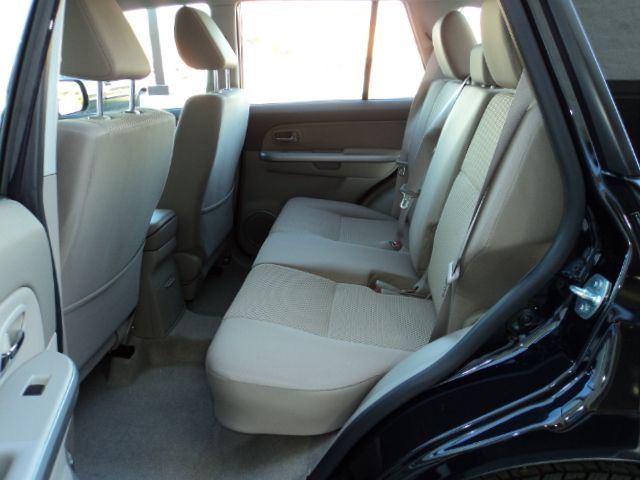
2011 Suzuki Grand Vitara less comfortable around town, and have worse fuel than the class leaders. This is one of the more affordable compact SUV. It's designed to do and a great performance does not have eligibility to take great prices. But that's all it is not too bad because it is supported with features - features that are nice.


New Grand Vitara is available in the EX and LX trim. Both trims are powered by 2.5-liter engine, V6 and can produce 165-horsepower and can achieve 22-mpg on the highway and 19-mpg in the city. V6 engine is mated to a five-speed manual transmission and four-speed automatic transmission.


New Grand Vitara provide online information such as wireless local Google searches, traffic, weather, fuel prices, a list of movies, flight status, local events, and white pages phone book - the first of its kind to be offered in North America by automaker.Available safety features include ABS, traction control, antiskid system, side curtain airbags, front and side airbags. A navigation system is standard on all; Premium and Limited models have the information real-time traffic. leather upholstery, heated front seats, keyless access / start the engine, and the sunroof is a standard feature-exclusive Limited. An optional wireless cell phone link to the Premium and Limited.


The New Grand Vitara gets facelift forthe year 2009 unnoticeable ,but the changes under the hood,with a new 2.4-liter4 -cylinder,mated to manual or automatic ,and 3.2 -literV6 with automatic only . and Mobil among several small 4WD vehicle that offers all-round capability right thanks to the 4 × 4 to low-range gearing and constructions such as trucks, with the V6 is now offering the hills continued and function-descent. Suzuki offers trucklet in 3-door and 5-door body styles.

Specifications:
Engine:
2.4L in-linefour-cylinder DOHC with variable valve timing and four valves per cylinder
•Unleaded fuel
•Fuel economy: EPA (08):, 19 MPG city, 26 MPG highway, 22 MPG combined and 383 mi. range
•Multi-point fuel injection
•17.4-gallon fuel tank
•Power(SAE): 166 hp @ 6,000 rpm; 162 ft lb of torque @ 4,000 rpm

Convenience

Front console with storage
Front and rear cupholders
Front and rear door pockets
Front seatback storage
Power steering
12V front and 12V cargo area power outlet(s)
Tilt-adjustable steering wheel
Audio controls on steering wheel
Instrumentation

Clock
Tachometer
Trip computer
External temperature display
Low fuel level warning
Compass

Friday, 1 April 2011

New Aston Martin One - 77 2011 Review


Aston Martin has released a new One-77,it fuses advanced technology with stunning Aston Martin design to create possibly the world’s most desirable automotive art form. Based on a sophisticated carbon fibre chassis with a handcrafted aluminium body, this 7.3 litre V12 super car will deliver exhilarating performance for a strictly limited number of discerning customers.


Aston Martin one-77features Carbon Ceramic brakes, Corsa tyres and it was priced at £1,200,000. The One-77 reaches the speed of 60 mph in just 3.5 seconds and the top speed is around 200 mph.


Aston Martin One -77 is that symbolizes A single definitive everything Aston Martin of technology, expertise hands rolled aluminum panels for the attention to detail. A culmination of all the marque's know-how, A-77 provides easy beauty is guaranteed to move the senses with the potential to eclipse the performance of any previous Aston Martin. 

This workmanship is incredible and there is no commitment of money-objects with the qualities that make A-77 unique. It promises a driving experience unmatched intensity and excitement while representing the most desirable form of art automotive world.


Concept One-77 including the powertrain and running full-awaited world premiere interior design. Mixed environments stunning interior details of the exterior and interesting in it, with extraordinary precision through the use of exotic materials and hand make the details of Aston Martin's engineering nectars and design expertise.

Luxury Cars Made From the Wood

Many cars are made of metal, plates, iron, or carbon fiber super. But there are some people that makes it different from the others. Functions like an ordinary car, but all bodies are made of wood, Modifikasi mobil.
 Let's see ...

Wooden car from Ukraine
Vasily Lazarenko wanted to make something other than when you first think of parts and car parts business seems to work.

In the town where he lived in Chernovtsny, Ukraine, Vasily takes one and a half years to bring together a unique vehicle, convertable, luxury sedans, and wrapped it all with oak wood (oak). He said he would sell the car if the buyer can bid for your next project cost of the other creative. How good?


Japanese Maniwa
Maniwa car is handmade from wood craftsman, to Kenbi.Maniwa-based Japanese company can drive a car as usual and can be sped up to speeds of 80 km / hour. Stang has a bike - no steering wheel -, stereo sets, and wooden doors Lamboo very cool.Wooden sports car has only one seat in front, but can carry two passengers on a wooden bench behind him. Kalo pengen has been pegged at $ 40,000 dollars.


Seeing the cars there is only one word "Incredible"

Most Expensive And Luxurious Cars in 2010


Throne of the most expensive in the world inhabited by the new king with the logo of Aston Martin. Aston Martin 77 which officially has been launched recently will be priced at U.S. $ 1.5 million dollars (15 billion more) and only produced a total of 77 fruit and forgiveness, has been sold out! Berkonfigurasi V12 engine capable of carrying 77 Aston Martin enlarged speed 97 km / h in 3.5 seconds with top speed limited to 320 km / hour.


Chris Porritt, Aston Martin One-77 Programme Manager continued: “We wanted to create something that wows you as much when you see what’s under the skin as the exterior styling itself. We started by identifying the most technologically exciting front-engined, rear-wheel drive cars in the world: those from the DTM race series. We then applied the principles and technology that feature heavily in their design and translated it to a road car application.”


“Quite simply it had to be the ultimate expression of Aston Martin. As you can now see, we have achieved that goal in magnificent style.”

Consequently the Aston Martin One-77’s structural core is a lightweight and immensely rigid carbon fibre monocoque. Conceived and designed at Aston Martin’s Gaydon HQ, the monocoque, or ‘tub’, has been built in partnership with Multimatic (MTC). As world leaders in carbon composite technology, advanced vehicle analysis and dynamic simulation, MTC brings unrivalled specialist capabilities to the exacting challenge of the Aston Martin One-77 programme.

Employing the classic formula of double wishbones at each corner, the Aston Martin One-77 features inboard suspension front and rear, with pushrods employed to transfer vertical suspension movements to the horizontally mounted spring/damper units. A practice taken directly from racing car design, the main advantages of inboard suspension are a reduction in unsprung weight and the ability to package the suspension components more effectively.

The dampers are fully adjustable and feature advanced Dynamic Suspension Spool Valve (DSSV) technology; a world-first for a road car application. These special valves are state-of-the-art even at the highest levels of motorsport, and use high-precision machined components to enable the shock-absorbing characteristics of the damper to be changed without having to remove them from the car, as is the norm.

While functionality and efficiency are paramount in the design and construction of the Aston Martin One-77, so too is aesthetic beauty. To this end every single component has been crafted from the finest materials with absolute attention to detail. From the mesmerising weave of the glossy carbon fibre tub and the abstract, sculptural beauty of the dry sump’s oil reservoir, to the unerring precision of the billet machined aluminium suspension mounts, the Aston Martin One-77’s rolling chassis is an automotive masterpiece.

Of course the irony is that the vast majority of these exquisite components will be hidden from view in the finished car, yet each and every piece is a work of art in its own right. It’s this extraordinary workmanship and money-no-object commitment to quality that makes the Aston Martin One-77 unique.

Naturally, such a spectacular chassis demands – and gets – an equally exceptional drivetrain. It comes in the form of an immensely potent 7.3-litre, naturally aspirated V12 engine. Thanks to the adoption of a dry-sump oil system the engine is mounted 100mm lower than in any previous V12-engined Aston Martin road car, which helps keep the Aston Martin One-77’s centre-of-gravity as low as possible. To further aid agility and endow the Aston Martin One-77 with progressive handling and stable, predictable on-limit behaviour, the engine is also mounted 257mm aft relative to the front wheel centreline. In so doing the front-mid-engined layout shared by all of Aston Martin’s current road car range has been taken to a new level.

The Aston Martin One-77’s magnificent power unit is an extreme evolution of the 6.0-litre V12 engines fitted to the Aston Martin DBS, DB9 and new V12 Vantage models. Like the collaboration with MTC for the build of the chassis, Aston Martin has chosen a world-leading partner with which to develop the motor: legendary engine builders, Cosworth. It has proved to be the perfect collaboration, as Chris Porritt explains.

“Our brief to the engine team was for them to take the 6.0-litre V12 as far as it could go, both in terms of output and weight reduction. The targets were a power output of no less than 700bhp with a 10 per cent reduction in engine mass. Incredibly, the Aston Martin and Cosworth engineers achieved a mass reduction of some 25 per cent, and although we’ve yet to complete the final engine calibration work, I’m confident we’ll see in excess of 700bhp. It’s an awesome accomplishment, but one that’s typical of the One-77 project, for it has consistently brought out the very best in everyone involved.”
Wearing Pirelli P Zero Corsa tyres (255/35 ZR20 front, 335/30 ZR20 rear) developed specifically for the Aston Martin One-77, all 700+bhp is transmitted to the road through the rear wheels via a new six-speed gearbox. Controlled via column-mounted paddles behind the steering wheel, this robotised sequential manual is a new generation of Aston Martin’s familiar transmission. Though it is made specifically for the Aston Martin One-77 and features specially strengthened internals to cope with the tremendous power and torque, the lessons learned in its development will ultimately find their way into the company’s series production models.
It’s a mark of the inherent capabilities of Aston Martin’s acclaimed lightweight Carbon Ceramic Matrix brake technology that it has been used as the basis for the Aston Martin One-77’s braking system. The internals of the callipers have been re-engineered to transmit less heat from the brake pads into the brake fluid, while the discs themselves have been developed to ensure the maximum possible contact area between the face of the disc and the brake pads for improved stopping power. Due to the Aston Martin One-77’s increased performance, special attention has also been paid to brake cooling, as the brakes have less time to cool between bursts of acceleration.

With a projected weight of 1,500kg the Aston Martin One-77 will occupy the very highest echelons of road car performance. Top speed is confidently predicted to be in excess of 200mph, with a 0-60mph time in approximately 3.5sec. Perhaps more importantly, thanks to the purity of a front-engined, rear-drive layout, the responsiveness and immense tractability of a naturally aspirated V12 and the low mass, high-rigidity properties of a carbon fibre chassis, the Aston Martin One-77 promises a driving experience of unrivalled intensity and excitement while representing the world’s most desirable automotive art form.

With prices much for the place of origin, this car could be worth more than 20 billion if the trafficked here. But the actual record holder for most expensive car in the world this year is the year 1961 Ferrari 250GT is sold at a price of U.S. $ 11 million dollars. But the car is classified as a classic sports car produced a few tens of years ago and has its own history that makes it very expensive.

What cars would be the most expensive and most luxurious car of 2011. Let's see the post that will come.